Showing posts with label exhibitions. Show all posts

Tuesday, 5 July 2011

Impasse

 
I have been living out of a suitcase for nearly four months now. So much luckier than the twelve thousand evacuees still living in cardboard cubicles in gymnasiums and public halls in the north east, but stressful nonetheless. I recently heard stress described as "responsibility without control". The only solution seems to be to live in the moment, and so I do, seeking to find the beauty, the joy, the fulfillment of each moment, each and very day.

May 29th:

The "Tombi" is a bird of prey (a kite, or so I am told) which is rare in the air above Mashiko, but thrives here in Minakami. I watch it circle in the grey sky above the rice fields as I drive to Ichikai on Saturday morning, the sound of it's shuddering cry just audible above the roar and clatter of the light "kei" truck. It pauses in mid air, then swoops lower and glides level with the car window as I rise onto the freeway ramp at Tsukiyono. There is a busy weekend ahead...


The Solstice has passed, but the days are still long. The sun greets me merrily as I rise and pack my bag once more. I leave for Komoro again today, and will not return till the weekend. I wake the older three children from their bunk beds and call them down for breakfast. I rebuilt their bunks here in their uncles house a few weeks ago, it gives them a sense of stability, continuity, home. I cook them omelettes for breakfast, and make coffee for Mika and me. Mika's sister, Emi, sent us some nice Italian roast from Tokyo. Sean would normally help me grind it, but we are leaving him to sleep today. He has had some chest infections recently, but seems to be OK now. Rest is best. I grind the coffee, standing at my stone work bench, so out of place in this borrowed kitchen, and watch as the children prepare for school. Folding a filter paper into one of my coffee drippers, I fill it with the freshly ground coffee and pour hot water into it in a spiral. We sit down together, "Itadakimasu", and chat as we enjoy the morning.

The boys are first to leave, and they pull on their "Landsell" leather school ruck sacks, jangling as they go. There have been bears around recently, so all the children have "Bear Bells" strung from their bags.

"How are those dinosaur bells working?" I ask them.

They look at me askance, "There are no dinosaurs around here, Daddy." says Rohan matter of factly.

"Gee," I say, "they must be working then!"

"No, Dad," says Sora, in exasperation, "Dinosaurs have been extinct for 65 million years!"

"WOW!" I say, "They really DO work!"

Canaan starts laughing first, and we all join in. I kiss them and hug them goodbye, and tell them to look after their mother for me till I get home. I watch them out of the garden, hear them greet their new friends on the road, and listen to their dinosaur bells jangling into the distance.


...The two and a half hour drive to Mashiko has become familiar now, and, between whistling and singing because the radio doesn't work, it gives me a great deal of time to think. After weeks of spinning my wheels in every way but the pottery sense, I am finally able to take some positive action. I list in my head the vessels I will make for the first firing, the materials and tools that I will need, doing sums in my head of the weight of clay, the minimum tools, the maximum load that the truck can carry. By the time I get to Mashiko I have already packed the truck in my head. Some time in the past two months since we evacuated, a large tree, weakend by the earthquake, has come down in a storm and smashed across the rooves of the tool shed and kiln shed. It hangs suspended horizontally between the two buildings. The grass and weeds are reaching up towards it now. How quickly nature asserts itself. Reversing up to the studio door I begin to load the ware boards first across the bed of the truck. On top of this I load the quarter tonne of clay I will need for the first kiln load, then remove eighty kilos and place it in the passenger seat. Wheel, glazes, sieve, basic throwing and trimming tools...within half an hour the truck is loaded. I strap the tarp down and tie it with truckies knots like Uncle Laurie showed me back on the farm in Redesdale thirty years ago. The truck wallows low on it's springs as I drive away. The next stage of the trip will be slower...


Mika and I clean up the kitchen. I take my bag out to the car, then come back inside and climb upstairs. I kiss Sean gently as he sleeps. Back downstairs, I kiss my farewell to Mika. It is difficult driving away. The blessing when the earthquake struck was that I could reach the children on foot. Now I drive off to a studio hundreds of kilometers and hours away, and leave them to fend for themselves. Responsibility without control. I drive on.


...Back on the freeway, heading west again, a misty rain starts to grease the roads. The rainy season has begun. I know that there is a typhoon coming tomorrow as well. Oh, what fun. I drive on through the drizzle, the poor little truck labouring under the load. I take the turn to Nagano and climb into the mountains. As the peaks become more dramatic, mist and rain turn the scenery into a sumie painting, with dark turrets of rock thrusting upwards against the pale ashen paper of the sky. I peer myopically into the mist ahead, my left hand groping with the knot in the saffron coloured cloth that Mika has wrapped around my lunch of rice balls. Through the nine tunnels and finally the off ramp to Komoro. I stop at a convenience store to phone my friend Giichi, to let him know I'm almost there. It has been a three hour drive from Ichikai...


I am afraid to add up the hours of driving I have done this past month or so. Our friends Debi and Julie came up with two trucks from Kamakura last week and we did three round trips to move the seven tonnes of bricks for the kiln to Minakami, fifteen hours driving in two days. With loading and unloading, it was a marathon effort. Our friends Lee and Jean sent me a Warren Mackenzie yunomi to replace the ones we lost in the earthquake. I don't know how we can ever repay every ones kindness. We are not alone in this world, and we must support each other, from those according to their ability, to those according to their need.


...We unload the truck, putting the wheel and the clay as close to the studio as we can. The ware boards and tools are stored under the eaves, I will sort the studio out on Tuesday. Laura, Giichi's wife, is in the UK with her daughters, she will be a grandmother again on Tuesday, Tuesday is turning out to be a big day. The truck is unloaded, we sit down and have a cup of tea and a biscuit. He gives me the spare key, shows me the futons and pantry, and we shake hands before I leave. I met him at Seth Cardews in the UK back in September 2001. I was in St Ives doing a workshop and exhibition when the planes hit the towers in New York, and, in the few weeks that followed, travelled around the potteries with my good mates Michael and David till the planes were flying again. Giichi and Laura visited me in Ichikai the following summer, and we have been close friends since...


Gallery Ciel in Utsunomiya has rescheduled my exhibition to the 25th of August...I have seven weeks. I arrive in Komoro, and Laura makes tea while I sort out the work from the week before last. After moving the kiln I was occupied with several other ongoing projects. Potters from Mashiko are donating pots to be sent to the northern prefecture disaster areas. The pots will be distributed to the evacuees so that they can enjoy their meals on real vessels, instead of paper plates and plastic cups, and help restore some quality to their lives. In a nation where hand crafted pottery is an integral part of the food culture, months of emergency food becomes a strain. I have given them rice bowls, yunomi and mugs to begin with, and will send more in weeks to come. There is also a project to create a new Internet site (working title "Mashiko Dori") to create a virtual Mashiko, so that visitors from around he globe can virtually partake in Mashiko's reconstruction, the pottery community and the tradition and art work of Mashiko. We plan to integrate a 4G system into Mashiko, with web cams and interactive sites, to take Mashiko to the world. We hope that this will help to sustain Mashiko despite the difficulties faced within Japan. It will take some time.

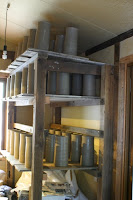
It is difficult working in a borrowed space, travelling large distances, and I have not been able to control the drying very well. I have had many losses, but I have learnt a great deal. I recycle and remake the pots that are cracked, and begin the next run of vessels for the exhibition. I have some which were prepared before the earthquake and survived, but the main body of the exhibition is still to be made. Laura sits at her wheel beside mine, and I offer her advice and, I suppose, mentorship in return for her studio space. She is very kind.

As we sit and enjoy a lunch of fresh baked bread and cheese, served on plates made by friends and potters we respect, a "Tanuki" (raccoon) walks through the garden just beyond the windows, foraging through the herbs. "Not the sage!" says Laura under her breath, "Please, not the sage!" It moves on, snuffling around the Shiso and Italian Parsley, then vanishes into the underbrush beneath the pines.
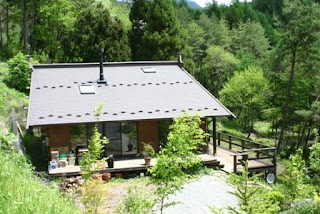

Laura and Giichi have been working on a project to provide a reprieve for Mothers with small children from the radiation affected areas in Fukushima and neighbouring prefectures, and have organised home stays in Komoro over the summer. These mothers are struggling to protect their children in an environment with uncertain levels of radiation, the long term effects of which cannot be measured, and yet they are responsible for the health and welfare of their children and have no control over their environment nor the information needed to make good decisions. I sympathise with the stress they are suffering, it is something which all residents of Japan must deal with for many years to come.


...The truck is lighter now, and I struggle up the steep gravel driveway. The rain is heavier as I head for home. Now that the clay is delivered and the studio awaits I am eager to get back to the wheel. But first there is one more task; tomorrows broadcast. Now, as I drive through the rising wind, my mind turns over the questions they might ask, things I might say, the things I wish to share. The director heard my broadcast on TBS radio last year and had contacted me before the earthquake about doing a live broadcast for NHK "Chikyu" radio. He came to Minakami last week to do some background research, the rough draft of the interview questions should be waiting on my email when I get home. The truck is harder to control, with out a load, in the blustering wind, and I find myself leaning forward tensely as I drive. The wind shield wipers are working overtime through the driving rain, and the storm seems to take a breath as I drive through the tunnels, only to renew the onslaught with greater fervour on the other side. It is two and a half hours to Minakami. That makes...eight hours driving today. Mika is putting dinner on the table as I walk in the door. Sora tells me about her basketball games today, the boys have finished their homework, everyone is excited about going to Tokyo tomorrow. After dinner I have a bath and I am asleep as my head hits the pillow...


I have brought my copy of Omar Khayyam to Komoro, and after dinner Laura sits in the drawing room and reads it while I work at the computer. I have been struggling for weeks, trying to move forward, but I find myself overwhelmed sometimes. So I must trust that my family is safe, amid these uncertain times; I must help those I can, though I feel helpless myself; I must gratefully accept the help of others, though I know not how I can repay them; and I must strive to live each day the best I can, grateful for the blessings I have, in hope of a bright tomorrow. If I do not write so often these days, it is because I am striving to fulfill my responsibilities, sometimes in circumstances over which I have no control. I thank you all for your help and support, and have faith that all will be well.


Friday, 27 May 2011

The Art of Living

The golden light of morning pours slowly through the window, spilling over the window ledge and down the wall. It washes gently across our futons which spread across the tatami floor, and softly begins to soak into the new day. The fragrance of Mika's dark, wavy hair is sweet as it splashes with the sunlight across her pillow. I listen to the sound of her breathing, of Sora's breathing beyond her near the door, the regular ebb and flow rippling softly through the cool morning air. I lay still, floating in this gentle pool of light, the sound of my own heartbeat whispering in my ears. A new day begins.

The last few weeks...is it six weeks since my last entry?...have slid past me like the trees beside the freeway. I try to make plans, but end up dealing with circumstances. Where do I begin?

April 16th; As the cherry blossom flutters to the ground like swirling snowflakes, Tokyo is amazingly normal, virtually unaffected by the earthquake except for the occasional blackout and beer shortage, or so I am told. The crowds bustle through the streets, and I feel like a spectator, isolated from the crowds. Today I will teach a workshop at the Sacred Heart International School. It was to be a three day workshop in Mashiko, but it has been condensed into one day in Tokyo; we have a lot to get through today. Now, more than ever, I want the students to understand how important the simple things are in life, the things we take for granted, the things that make life real. The joy of preparing simple food, served on hand crafted vessels, enjoyed with friends and loved ones....

I have always known that, left to it's own devices, the world is a beautiful place. This has become more and more clear to me as my career as a potter has proceeded. When I was a young potter I would try to force the clay to my will, and inevitably would achieve a result that was forced. As the years passed, however, I learned that it was most important for the potter to stay still and allow the clay to find its own form. One must surrender control and allow nature to be beautiful; In this moment, in this place, for every day of our lives.


...we bake scones in the electric kiln, serve them with cream and blueberry jam on some plates of mine which survived the earthquake. Margaret dips some strawberries in chocolate, we make salad and casserole. This is why we make pots, and it is this moment that they become a part of our lives. In order, therefore, to make good vessels we must understand this first...


At the same time, one must be aware that there will be times when nature is harsh. There will be earthquakes and tsunami, there will be typhoons and floods, and we must learn to be prepared for those events. We must learn from the past to build a safe future. I was not prepared for the earthquake. I will not repeat the mistake.

...as the students throw bowls and plates on the wheels, the building shudders. The shaking gains intensity and Steve materialises a sack of yellow safety helmets that the students don as they dive beneath the tables. The earthquake subsides, it was probably only a three, the students return to their wheels, helmets still on...

I rise quietly and pull on my clothes before going downstairs. I fill the kettle with fresh water and put it on the stove. Taking one of my coffee pots and large coffee drippers from the cupboard, I warm them under the tap before setting them on the stone bench. Beside them I place the coffee grinder, and fill its hopper with dark roasted beans from the freezer. Turning the handle while the kettle heats, I look out the window at the peaks of the Mikuni mountains in the distance, silhouetted against the sky, their jagged outline dark, patches of snow still clinging to their slopes. Closer and closer they march, greener and softer with each rank, mist still skulking between them, till they become the richly forested hills across the valley. Splashes of mauve wisteria and paulonia flowers mingle with the green. The town spreads below us on either side of the Akaya River and Route 17 that runs beside it. Mika's parents rice paddies fill the river flats, and a bamboo grove mingled with trees climbs up the steep slope to the kitchen window. Spring is turning into Summer, and ferns and grasses fill the gaps between the trees while vines climb up their trunks and branches toward the light. Edible "Cogomi" fern fronds, bamboo shoots and young "Sansho" leaves supplement our larder. A leaf quivers in the gentle breeze and dew rolls down its veins to hang like a jewel for a moment before dropping to the violet grass flowers below.

April 17th; A carpet of cherry petals stretches across the cobbled path as I walk to Gallery St Ives. The streets are quiet on this Sunday morning in the back streets of Setagaya. The houses are rich, some of them are embassies, the gardens clipped and precise. I turn the corner and there is the gallery with its red facade, the "Chocolate Factory" pottery studio next door. I cross the road and open the door, the bell attached to it tingling merrily as I step inside. Ken Matsuzaki is there already. We have spoken on the phone since the earthquake, corresponded by email to organize the relief fund for Mashiko, but this is the first time we have been face to face since the crisis. He rises from his chair and we hug, tears welling in our eyes...

The kettle sings out to me that it has boiled and I switch it off. I fold an unbleached filter paper into the dripper, fill it with the fresh ground coffee and pour the hot water into it in a thin, spiralling stream. Froth rises on the surface of the coffee, and gradually the dripper fills. I stop pouring as the foam reaches the edge of the paper and domes across the space between, and let the coffee seep through to the pot below. I choose two coffee mugs, a curved one for Mika, a straight one for me, the handles springing from the rim and swirling down the side of the mug like hair across a pillow case. I warm some milk from Sarobetsu, on the northern tip of Hokkaido, and pour it into the mugs. The water in the dripper has filtered through so I remove it from the pot, replacing it with the lid, and pour coffee into the warm milk. The clock strikes 6am, and I carry the coffee upstairs to Mika. We wake the children and get them organised for breakfast. Back downstairs I make a muesli of cashew nuts and raisins, ground sesame, rolled oats and corn flakes. I serve it in the black glazed rice bowls and we sit down together for breakfast, joking, teasing, laughing.

...there are customers all day, we greet them as friends, for that is what they have become. Our vessels are part of their lives, every day, bringing them joy and relief from the artificiality of the modern world. We are part of our vessels, too, and they are extensions of us, and so our visitors know us through the vessels, and care about our lives as well. I tell the story of the earthquake to them each, and listen to their tales. An exhibition is not about selling pots, it is about sharing, making contact. Sometimes it is the touch of a hand, touching a vessel, laughing and, yes, occasionally crying. At the end of day Kens daughters come to the gallery, and we talk about when they were small, playing the drums in the "Dashi" at the Mashiko summer Matsuri, while I pushed it with the other men up and down the hills through the summer heat...

The kids go off to school, and Mika and I get our paper work together. My full resume, a list of the galleries with whom we deal, the plans and quotes for the new studio, our tax returns. We have a meeting with the Chamber of Commerce this morning. We have spoken to several lending institutions already; some do not lend to foreigners, others do not lends to self employed, others do not lend for business ventures. I seem to be a risk, we need some good advice.

Mashiko Pottery Festival, April 29~May 5; We set up the tents as always, though our stocks were low. Many faces that we usually see, other potters who have participated in the pottery fair for many years, are absent. Some have returned to there native land; America, New Zealand...we do not know if the customers will come, but we will put up our displays, and we will be there for those who do. If they come, despite the earthquake, the nuclear disaster, or because of it, they come for us, and we must be there to greet them. And they come. They come in their thousands. They ask us how we fared in the disaster, we tell them the truth. Many of them have fared as badly in their own homes as us, but still they have come. Over the week we have perhaps 60~70% of an average year in both visitors and sales, and we are grateful as we expected nothing and no-one. We have been blessed...

The gentleman at the Chamber of Commerce is kind and helpful, advising us on the paperwork we still need, contacting the "right" people. There is still the possibility of financial help as victims of the disaster, but need to have different forms...

..One of the younger potters in Mashiko is making a data base of potters, but he does not come to me. Another friend is working on a project to make a "Virtual Mashiko" and take Mashiko to the world. One of the other potters asks me if it is the same project, I say I do not know. I catch the young potter with the data base and ask him. He says, "Your not in Mashiko anymore, this is none of your business." He is matter of fact, and I am lost for words. My Virtual Mashiko friend needs me to translate, to act as an intermediary for Mashiko. I go to speak to the people who lead Mashiko. They are eager to work on the project...I tell them about the data base and ask them whether they feel I am still a part of Mashiko...They tell me not to worry about him, that I am one of them...

My plans for the studio are not extravagant. A simple, square building, 7.2 metres per side. One quarter will be the kiln room. I will use second hand window and doors, but I have learnt from the earthquake that a tiled roof is a bad idea, and we shall go with corrugated iron. I am redesigning the kiln to earthquake proof it, at least up to the level of the last earthquake! And I will not use electricity. Natural light, kick wheels, wood kiln, rain water. As potters did for ten thousand years.

...I visit Tomoo Hamada, and take him some hand made Camembert cheese from Minakami. He shows me his kilns, reduced to rubble. They are already rebuilding. If I stayed in Mashiko there would be help, financial and physical, I know. I tell him of my plan.
"Isaka san tells me you are looking for a second hand kick wheel?" he says.

"Yes, I know that my position will make no difference to the nuclear situation, but if we all chose to not use what we do not need, perhaps there would be no need for nuclear power." I say. "It is a small thing, but all I have ever wanted is just to live quietly, in peace, and make beautiful and useful things for the people I love."

He leads me round the back of the workshop, to the storehouse. "We haven't used this wheel for years, it might need some work on the bearings. It's a present for you." he says.

The wheel is wooden, made from "Keyaki", and in perfect condition. I am dumbfounded. " Really?!" I ask.


"It's from the original Hamada pottery, it hasn't been used since we moved into the new workshop. I'd like you to have it. Gambatte kudasai."....

We return home, we have a meeting on Monday with an advisor from the prefectural office. I check my mail. There is an order from a restaurant in Sydney, Australia. They don't know about my kiln, my studio. It's a project we've been working on since last year. I have other orders, too. But no kiln. No studio. Many friends have sent us help, have offered to come and help, and we are trying to put our plan into action, but I can't get it together yet, and I need to get back to work soon. There have been offers of other jobs, English teaching or translating; real jobs, they say. But I have a real job, in fact it's about as real a job as you can get.

My friend from Komoro, in Nagano offered to lend me her kiln and studio. I built her a Fast Fire like mine in 2007 , so I contact her to ask if the offer is still open. She says yes. I contact the restaurant, I let them know the situation, I can start making their order on Tuesday. Tomorrow I will drive to Mashiko and get clay and tools, take them to Komoro and return home. On Sunday I will take Mika and the children to Shibuya in Tokyo. On Sunday evening, somewhere between six and seven pm, I will be doing a ten minute live interview on NHK 1, international radio. So, if you speak Japanese, tune in to "Chikyu Radio" on Sunday night, or listen to the podcast for the next week.

From Tuesday of next week, I will be a potter again. It will be in a borrowed studio, with a borrowed kiln, but it's a start. There are many people who have faith in me, who encourage and support me, and there is always hope.

From the movements of the stars and planets to the falling of a drop of dew, nature is beautiful as a matter of course. It is not contrived or artificial, it springs from the beauty of the process. I will continue to strive, to make each day, each moment, as beautiful and rich as I can, and trust that that beauty will live in my work. No matter what plans I make, I find myself dealing with circumstances. But that is the way it is, and I cannot force the world to my will, any more than I can force the clay. I trust that if I live my life as honestly as I can, each and every day, then life will be beautiful, as a matter of course. I will let you know how I get on.

Wednesday, 13 April 2011

The Raven


The sun climbs tentatively through my bedroom window as I wake to the nightingales call. Just beyond the first range of peaks a bank of clouds reaches tenderly around the shoulders of the mountains in a misty embrace. There is a raven building a new nest on the top of the power pole outside. It is spring.


We raise the shutters in the children’s room and shake them from their slumber. Though they sometimes cry out in the night still, they seem to sleep more soundly with each passing day. A month has passed since the earthquake, and though there are still aftershocks, as many as eight or nine tremors of scale 3 or more every day, we are settling into a new routine.


After a breakfast of eggs and ham on rice, Canaan and Rohan go off to primary school. I walk with them to the corner and watch them down the hill as they join up with their new friends. The raven flies over my head with a broken branch in its beak.


I take the path beside the stream to the main road. Other children are waiting beside the bridge with a grand-parent and a mother watching over them. I greet them as I cross the bridge and walk on to the convenience store. I check the labels on the milk, it comes from Gifu. I buy two litres.

We moved most of our remaining personal belongings last weekend and the hot house is now full. Our friend Take-chan borrowed a truck from a work mate and did the round trip with us. My next challenge will be to build the studio and kiln shed so that I can move the pottery here and get back into production. Volunteers have been helping with the clean up in Mashiko, sorting out the bricks from the collapsed kilns. Mashiko, Ichikai and Haga have all been officially declared disaster areas, though they are overshadowed by the devastation in the north east. In each of the towns there are designated areas for the debris. There are huge piles of rubble, of broken pottery, of stone blocks from store houses, of masonry and timber and furniture…piles that dwarf the heavy machinery used to sort them.

As I walk back up the hill to the house I pass Sora coming the other way on her way to high school. She has promised to meet her new friends from the basketball club and walk with them to class. We joke and laugh as we pass, and I stop for a moment to watch her walk away, her curly hair bouncing behind her as she goes. As I walk up the driveway the raven brings another twig to the precariously balanced collection gathering at the top of the power pole.

I walked around the empty house in Ichikai on Sunday evening, the sound of my steps loud in the dusty air. So many memories were made within these walls, the sound of baby’s laughter, the company of family and friends…I carry them with me now. The house is just a house.

I make Mika a cappuccino while she prepares Sean for preschool. It is our first in a month, it seems so much longer. Sean comes into the kitchen to show us his new smock. Neighbours and relatives have lent us school uniforms for the kids. There are eight other new children at the primary school from the earthquake or radiation affected areas, so our children are not alone. The community here, the teaching staff and the local council are very kind and supportive. The number of refugees here has dropped, however, as people return to their homes. Regardless of the ongoing threat, there are many who choose to return as soon as they can to rebuild their lives, their careers, their schools. Issues of financial security and their children’s education outweigh lingering fears. I wish them well.

We drive Sean to the preschool. He runs ahead of us into the playground to climb on the jungle gym before we go inside. As we leave he calls out to us to come and get him early today. We promise that we shall. We drive away, waving out the window to him.

Today I am preparing for the exhibition in Tokyo. Gallery St.Ives has organised an exhibition for the Mashiko Earthquake Appeal, and I must deliver the pots tomorrow. Five potters from Mashiko have been invited to exhibit, and part of the sales will go to the relief fund. Ken Matsuzaki, Tomoo Hamada, Yuchiko Baba, Minoru Suzuki and I will be exhibiting our work from Saturday, April 16th till Sunday, May 8th. It is an honour to exhibit with them.

I sorted through the pots in the old house last weekend, discarding the broken work, selecting out the best pieces which survived the earthquake. This had not been my first priority, and only now do I begin to assess the damage to my pottery. Work which had been wrapped and stored in containers survived well, as did the tea bowls and yunomi which were in their own signed wooden boxes. Many of the pots which were on the shelves went crashing to the floor, but amid the shards it was surprising how much of the work survived unscathed. There is enough for this exhibition, and enough for the Mashiko pottery festival at the start of May…I wonder if there will be any customers?

Lining the vessels up on the kitchen table. Polishing them up and making sure they are in perfect condition. Listing them, numbering then, pricing them. Wrapping them up again and putting them into containers for transport. I have been borrowing a computer till now, which has helped keep me connected with you all, but we have set our own computer up at last, though the internet connection won’t come till a fortnight from now. Mika makes the list for the gallery on our computer, we download it to my MP3 and send it to the gallery from a borrowed internet link. NTT has provided free internet access to refugees at most town offices.

Tomoo Hamada (Shoji Hamada's grandson), Clive Bowen and me at the Hamada Museum, Mashiko 2009


Though I began my pottery career in Bendigo, Australia back in 1978, I came to Japan with two canvas bags in 1990, to the traditional pottery town of Mashiko, where the National Living Treasure Shoji Hamada worked, to the home of Mingei. I was honoured to be accepted as a deshi to Tatsuzou Shimaoka, Hamada’s disciple and also a National Living treasure in his own right. And when I graduated, I chose to remain in Mashiko, to establish my own studio, and work towards being accepted here, not as a guest, but as a peer. After 21 years in Mashiko, I think I achieved that. It is very difficult to leave.


Tatsuzou Shimaoka, National Living Treasure, and his deshi at his 88th birthday, 2007 (Ken Matsuzaki 6th from right, me 6th from left)


The raven has continued to build its nest, and as dusk falls the structure seems quite solid and firm, meshed into the cross bar at the top of the power pole. Sean is excited to see how it has progressed. I tell him that the raven has probably come here from Mashiko, just like us, to make a new home. He likes that idea. So do I.

The kids are home, we feed them and bathe them and get them off to bed. Tomorrow I will deliver the work to Tokyo. I have a workshop to teach on Saturday and I will be in Gallery St.Ives on Sunday. Last year, Isaka-san, the gallery director, asked me if I considered myself an Australian potter or a Japanese potter.

“Born in Australia,” I said. “Made in Japan.”

Monday, 22 November 2010

Just My Cup of Tea


I was sitting with Miyake san in the tea room, enjoying macha from some of my new bowls. This is where my tea ware is really tested, and we have done so every year. Tomorrow we will be having a tea ceremony here with fifteen Japanese guests and we are selecting the bowls today from those which I have in the exhibition. Some are better for summer than this cold autumn day, and some might be better on the lawn under the cherry blossoms in spring, but the choice of bowl is an expression of the tea masters sense, and there are plenty to choose from. As we talk I remember other days in this room, other bowls and conversations. A couple of seasons ago I wrote an essay about such a day, and I share it again with you here, with some photos of this years exhibition.


Just My Cup Of Tea


Sitting in the tea room at the back of the gallery, I listen to the whisper of the water as it simmers in its iron kettle on the charcoal brazier. Its lid is slightly askew, leaving a gap at the edge which stops the water from boiling over. The mid morning light filters through the paper of the shoji screens to softly illuminate the tatami floor.


In the Tokonoma alcove is a bottle shaped vase with a single blossom. “Hidasuki” straw marks circle its neck and drape down the side where the wood flame has hit the porcelain surface. Beside it on the wall is a “kakejiku” scroll. It is a painting from the Edo period of the view of Nihombashi from the street outside. The merchants bustle about between what has now become the Mitsukoshi department store on the left and the Mitsui bank on the right, with the road between them leading up to Edo Castle, now the imperial palace, and Mount Fuji in the background. Usually the kakejiku would be calligraphy, a poem or phrase in Kanji characters, but Miyake san has chosen this painting because it is of where we are, an echo of the past which lives on in the tradition of the tea ceremony. Among the characters bustling in the street scape is a merchant carrying a large chest wrapped in a furoshiki cloth on his back. I joke with Miyake san that this is his great grandfather moving to Nihombashi from Kyoto with the Meiji emperor in 1868.


The writing was on the wall. It said;

“By Appointment to the Imperial Household

Ebiya Art Gallery

Dealers in Tea Ceremony Wares and Antiquities

Since 1672”


On the mat in front of me, on one of my small square plates, is an exquisite “Mame Daifuku”, a cake of sweet bean encased in rice paste. These are from the same shop in Ueno where I first tasted them, and though I have had them from other makers since, none compare with these.


Miyake san enters the room with a tray, his soft white footware brushing gently across the tatami. On the tray are arranged tea bowl (Machawan), tea caddy (Natsume), whisk (Chasen) and bamboo spoon (Chashaku). He bows deeply and then carries them to the space in front of the brazier.

In the back of my mind I can hear my mothers voice, “Take the pot to the kettle, dear, not the kettle to the pot.”

The tea room at Ebiya is unusual in that the brazier is in the back left corner, meaning that many of the actions must be done in mirror image of a normal tea ceremony. “Ki An” is the title of the tea room. It is difficult to translate, as the “Ki” means to return home, and the “An” means tea house. This is especially significant for me. When I came to Japan I had to choose kanji characters for my own name, as stamps, not signatures, were necessary for all legal documents. It meant giving new meaning to my self. The kanji I chose were “Yu” which is glaze, and “An”, the same kanji as the tea room, to which I have returned every year since 1993. This tea room, at the back of the gallery in the centre of Tokyo, is where I sleep during the exhibition, and I prepare my breakfast over the brazier and welcome guests into my home here. This tea room is a home to which I can return.


Removing a cloth from the “Obi” sash of his kimono, unfolding and refolding it, he begins to meticulously clean the tools on the tray. First the natsume, then the chashaku are wiped and replaced on the tray, each movement economical and elegant. The chasen and “chakin” (tea cloth) are removed from the bowl, and he begins to wash it. Setting the lid straight on the kettle he lifts it and pours some hot water into the bowl. After replacing the kettle he lifts the Chasen, examines it, whisks the water, turns the chasen to examine it again, and replaces it on the tray. He then empties the water from the tea bowl into a “Kensui” bowl that he had prepared behind him. The Kensui is taller and wider than a chawan, flared at the top to accept the discarded water. Using the chakin he wipes the bowl dry, four strokes which cover the base of the bowl and spell the word “Iri”, to “put care” into an action.

“Always warm the pot with hot water first, dear, before you make the tea,” says mums melodious voice.

As he lifts the Chashaku, he turns to me with a smile. “Okashi o douzo,” he says, please enjoy your cake. I lift the plate from the floor, cut a piece of the “Daifuku” with my cake blade and place it in my mouth. These are one of my favourite cakes, the soft sweetness of the coarsely ground bean inside playing against the slight springy resistance of the rice paste casing, with just a hint of salt.

Mum used to serve the best scones with lemon curd and cream for morning tea, the savoury flavour of the fresh baked scone, the tartness of the lemon, the saltiness of the butter, the smoothness of the cream…….

As I eat, Miyake san removes the lid from the natsume and spoons out some bright green powdered tea into the bowl with the chashaku, striking it gently but sharply against the edge of the bowl to shake off any clinging powder. Each year he has a special delivery of macha made from the first leaves of the new crop, the “Shincha”. The colour is more vivid than most tea, the fragrance lighter, the flavour sweeter.

There was one brand of tea that Mum insisted on. “All the others taste like the sweepings from the teahouse floor!” she’d say, “Now, one spoon for each person and one for the pot….”

Pouring the water once more into the bowl and replacing the kettle on the brazier, he lifts the chasen and begins to whisk the tea. Making a bridge from rim to rim with the thumb and middle finger of his left hand he vigorously whisks the tea into a foam, finally slowing to a stop and gently lifting the chasen from the bowl. After putting the chasen back on the tray he lifts the bowl with his right hand onto the palm of his left, turns it twice, perhaps a quarter turn each time, until the front of the tea bowl faces me. He reaches out and places it wordlessly on the tatami in front of me.

“Always turn the pot three times in a clockwise direction,” says mum….

“Chodai itashimasu,” (I gratefully receive this) I say as I reach out with my right hand and slide my fingers under the hip of the bowl till I touch the foot, place my thumb on the lip and lift it to the palm of my left hand. The foot fits comfortably between the first and third joints of my fingers, smooth against my skin. I also turn it twice, till the face of the bowl is now towards him and then move the fingers of my right hand to the side of the bowl. After a slight bow, I lift it to my lips. The colour of the green tea against the orange flashing on the wood fired surface lift each other, and the warm fragrant fumes waft across my face. The lingering sweetness in my mouth from the daifuku mingles with the spicy flavour of the tea. There is no other flavour to which it can be likened. It is macha.

I finish the tea and smile in satisfaction as I lower the bowl. The last skerrick of tea runs down into the throwing rings in the centre of the bowl, making a green spiral against the flashed porcelain, like the ying and yang. I wipe the lip and turn the bowl once more so that I can see the face, where the “hidasuki” marks of the tatami straw mingle with the wood ash where the flame has licked the surface and begun to form runnels. I invert the bowl to examine the foot, the turned surface distinct from the thrown, with shell marks on the foot ring from where it was set in the kiln. I turn the bowl once more and pass it back to Miyake san, who has been waiting, watching, patiently.

He takes the bowl once more, washes it as before and says to me, “Moh ippuku ikaga desu ka?” (Would you care for another cup?) I waver for a moment, then reply, “Iie, oshimai kudasai.” (No, please feel free to finish.)

He bows. “Oshimai itashimasu.” (I will draw to a close.) He pours hot water in the bowl once more, this time to wash the chasen, which he examines carefully to make sure it is clean and undamaged. After disposing of the water in the kensui once more he wipes the bowl and places it on the tray. He wipes and replaces the chashaku and natsume into their correct position on the tray, refolds his cloth and tucks it back into his obi. Rising to a crouch, he lifts the tray, stands, and shuffles quietly from the room, kneeling to bow deeply at the door.

I wait quietly for his return, savouring the calm, alone for a moment once more with the kettles song. It is easy to forget that the bustle of central Tokyo is only metres away. Just on the other side of the shoji screens, beyond the display windows, crowds throng and traffic oozes along the “Chuo Doori”(central road) to and fro across Nihombashi, the bridge of Japan. The river which runs below it is named after the bridge. The centre of the bridge marks the geographical centre of Japan, and the imperial palace is just a short stroll away.

He returns with the bowl and places it in front me.

“Doh?” (How was it?) I ask.

He smiles. “Hijouni tsukaiyasui!” (Very comfortable to use!) he says enthusiastically. “The shape and surface make it very easy to foam the tea, and the size fits the hand exactly. Did you see how the colours worked together?” I smile and nod. We sit and examine the bowl again, dissecting it, holding it and turning it. Discussing how it fits in the hand, how stable it was to whisk the tea, how beautifully it enhanced the tea. We have done this every year, and I have learned about tea. It isn’t just the bowl. It’s the entirety of the ceremony that is art, art in process. I would never pretend to be a tea master, for to become a tea master is a life long dedication. No, I am just a potter who is a student of tea at best.

The tea ceremony isn’t an arcane mystery, it is an exploration of the beauty of simplicity. It touches all your senses, gently, with no embellishment. How simply, beautifully and most of all deliciously can you make a cup of tea? For that is the essence of a tea bowl, not a rigid structure of size or form or colour, not a regurgitation of how other tea bowls are, but a foray into the pleasure of a nice cup of tea.

It is the morning of my fourteenth annual exhibition here at Ebiya Gallery, and the doors will soon be open for business. But for this little time Miyake san and I have it to ourselves. We step from the tea room into the main gallery space, with my pots displayed on its antique furnishings. Later I will wrap the teabowls in saffron cloth and sign boxes for them, sealing them with my Japanese stamp. And hopefully they will come to life in someone elses hands and give them joy in using them, just as I have taken joy in their making.

And somewhere in the back of my mind, “There’s nothing like a nice hot cup of tea.” Say’s mum…

Sunday, 21 November 2010

Opening Day

The customers have gone; I am alone. Midnight has just passed and the five antique clocks which hang on the walls of Ebiya Gallery just struck sixty o'clock. It was a quiet opening, partly due to the fact that the advertising didn't start till Thursday, but also because that is what I wanted this time.


I had prepared half the exhibition two months ago, but there were always those other vessels that I wanted to make....and so the Mashiko Pottery festival came and went, and the shelves were full of pots waiting to be fired. I selected the best 400, and stacked the kiln. After over 200 wood firings I know where the flame will flow, where the ash will fall, where the clouds of vapour will caress the surface of the vessels. Using sea shells and Igusa straw I stacked the pots, and when the kiln was full I sealed it up and prayed. My skill is only a fraction of the finished pot, for at every stage I am borrowing the forces of nature and adding to them a purpose. It is the nature of matter, of amorphous clay, to find a shape which will bring balance, peace and harmony within the parameters of the natural forces at work upon it. It is the nature of humanity to be nature self aware, to recognise the beauty of nature and express it with our own unique voice. But we cannot control nature, we can only guide it, and it is only by surrendering control to the greater power of the universe that our endeavours can find true beauty in form. And so I fire my kiln, knowing about how carbon and oxygen and hydrogen and sodium will all play their parts, but understanding that the kiln, the flame, will tell me when it needs more wood, or  less draft, or more air.


Sean, with all the wisdom of a five year old, asked if he could help. "Of course", I said, though the kiln was seething at volcanic temperatures. "Can you count to 5?" I asked.
"Yes." said a confident small voice.
"Then please pass me five pieces of wood."
And so he did, and he arranged them in rows, and passed them to me when I needed them, and the firing belonged to him as well. When the pots emerged from the kiln they were his pots also, and they were the most beautiful pots I have ever made.


Beauty is not a noisy thing. It is quiet and strong and gentle.

I sit in the gallery alone, but not lonely at all, for these pots are born of my love of life, and each is a voice singing softly to my soul. All of my experience, those I have loved and who are gone, those who love me and give me strength, those who wait for my return, are part of these quiet pots, and I will sleep in peace tonight.


Friday, 19 November 2010

Tokyo Exhibition

I would like to invite you all to my 17th annual exhibition at Ebiya Bijutsuten (Ebiya Gallery) in Nihombashi,Tokyo. I am honoured to be able to exhibit here once again, and Miyake san was kind enough to write the following introduction;

Concerning Euan Craig

“My vessels first become complete the moment they are used by the hands of my guests.” These are the words which always spring from Euan’s mouth and they express his passion as a potter. For over 17 years, since I first met Euan till this very day, this has been an unchanging quality imbued in his work.

Always full of smiles to greet you, under any circumstances, Euan is a potter with a truly gentle heart. I cannot help but believe that it is because of this that every single vessel which is born of his hands returns a heart warming message from everyone who uses them.

Together with Euan, we have accumulated these annual exhibitions one by one. I am blessed to have shared such wonderful times with him, and I am a truly happy man.

It is simply my heartfelt hope that in times to come, 10 years, 20 years…and even 100 years hence, Euan’s vessels will continue at everyones side, to be loved and find treasured use, forever and always.


Masahiro Miyake
9th Generation Master of Ebiya Art Gallery,
Nihombashi, Tokyo
Purveyors in Antiquities since 1672


「私の器は、お客様の手元で使っていただいて時、初めて完成するんですよ!」
この言葉は、ユアンがいつも口にする陶芸家としての熱い思いでございます。

それは、私がユアンと出会ってから今日を迎えるまでの約17年間、けして変わる事なく、その作品に込められてきました。

どんな時でも笑顔いっぱいで迎えてくれるユアンは本当に心の優しい陶芸家でございます。だからこそ、彼の手から生まれる器の一つ一つが、皆様からの暖かきメッセージとなって帰ってくるのだと私は思えてなりません。

ユアンと共に、こつこつと積み重ねて来た毎年の個展。こんなにも素晴らしい時間に恵まれました私は、本当に幸せ者でございます。

この先、10年・20年・・・そして100年先も、ずっとずっといつまでもユアンの器が、皆様のそばで愛され続け、大切に使われてゆく事を、ただただ心より願うばかりでございます。


2010年10月吉日

海老屋美術店 9代目店主 三宅正洋


EUAN CRAIG CERAMICS EXHIBITION

2010.11.20.Sat.-28.Sun. 11:00am-7:00pm (Open everyday)

Opening Party; November 20th from 5:00pm, with cuisine provided by Kappo Toyoda.


EBIYA GALLERY
3-2-18 Muro-machi, Nihonbashi,Chuoh-ku, Tokyo 103-0022
TEL. 03-3241-6543
FAX. 03-3241-1914
http://www.e-ebiya.com/category/1165681.html


I'll be at the gallery every day. If you are in the area, please visit and enjoy my new work.

I look forward to seeing you there.

Euan Craig

Thursday, 11 March 2010

The Real World


Home. After a week in Tokyo I am home. My return was delayed by a late fall of snow on Tuesday night. My friends asked me to stay an extra night rather than driving through a worsening blizzard on dark, icy roads, and I thank them for their kindness and hospitality. The snow had turned to rain by yesterday, and the grey sludge that had made Tokyo's roads so dangerous the night before had washed away without a trace. The congested traffic thinned gradually as I headed out of the city, north into the country. The houses became sparser, replaced by fallow fields not yet sown for spring and an ever increasing number of trees. There was still snow on the ground when I got home, though a drizzle of rain was making it thin. Mika came out to greet me as I pulled into the driveway. The kitchen was warm from the wood stove and by the time the kids came home from school it was snowing lightly again. Home.

This morning the sun rose through the snow covered trees in front of the house. As I went out onto the front veranda to feed the cats, I startled a family of pheasants that had been scratching in our compost heap and they scattered noisily into the bamboo. When I returned to the kitchen the children were busily preparing for school while Mika readied breakfast. We all sat down and enjoyed our morning meal together before they hurried off to join their friends. When Mika returned from taking Sean to preschool we had a cup of drip filter coffee and chatted while I signed wooden boxes. We made a delivery of beer cups and tea bowls to a gallery in Utsunomiya during the day and by the time we returned home it was quite warm out side. We sat on the bench in front of the house and enjoyed the sun for a while.

The exhibition went very well this year, better for me than last year, and I thank my friends and clients for making it so successful. I am, however, glad to be home, away from the constant buzz of the city, the crowded subways, the grey concrete and black tarmac. I am happy to sit in the sun and listen to the wind in the trees, rather than stand in the windowless, artificial light of the department store and the drone of piped music. To know that what I see is what there is, not just an elegant facade. On breaks from the department store I would walk to Ebiya across the bridge and find calm in that little oasis. In the evenings my friends made me welcome in their home. It helped me through the exhibition. But the city and all its artifice distresses me, and I am glad to be here, in the real world. Home.

Wednesday, 3 March 2010

Takashimaya Exhibition in Tokyo


Today sees the start of an exhibition at Takashimaya department store in Nihombashi, Tokyo.
Myself, Penny Simpson and Peter Seabridge are holding our second exhibition in the 7th floor Kougei Gallery, and we will be there every day till Tuesday the 9th. For several years we exhibited together at the Tokyo Dome Tableware Festival, but from last year Takashimaya has hosted our show.


The timing of the exhibition also coincides with the restaurant G'Drop winter menu which features my vessels. So, if you're in Tokyo over the next week, drop by and see us!

Wednesday, 21 October 2009

Below the Belt


Yesterday saw the end of my exhibition at Mitsukoshi. Thanks to all of my guests throughout the exhibition for your support. I was very touched by the gifts I received. It was great experience and I would like to thank everybody involved in the exhibition, its preparation and successful execution. In particular Hashimoto san was fantastic, both in his cooperation at the design stage and the fantastic food he served throughout the exhibition and also the wonderful demonstrations that he did with me at the talk shows at Mitsukoshi on the 10th.


The demonstrations were packed, with all the seats taken and folks standing up at the back. I've never been comfortable with a microphone, but Hashimoto san was provided the only clip on which left his hands free. After an introduction by the Mitsukoshi MC, I gave a talk about the aesthetic and technical aspects of my work, about why I became a potter and about the food and pottery collaboration. Hashimoto san then gave a demonstration and a talk about how best to serve food on my vessels, the principles of composition and the importance of emphasising the season, and balance in flavours, textures and colours. It was a fascinating and educational experience for everyone.


Many guests were able to enjoy the vessels and the cuisine at Kappo Toyoda during the exhibition (including myself...fantastic!), and at one stage there were so many bookings we borrowed extra vessels from the exhibition! All in all another invaluable experience to have under my belt.

Wednesday, 14 October 2009

North to Murata


There is less than a week left to visit my exhibition at Mitsukoshi in Tokyo, but for many that is too far to travel. Mashiko is at least 3 hours drive north of Tokyo, and tomorrow I will be trekking another four hours north to the town of Murata in Miyagi Prefecture for the annual autumn pottery festival there. The festival is open to the public Friday 16th, Saturday 17th from 10:00am~6:00pm and Sunday 18th from 10:00am~4:00pm. You will find a map linked here.


The main street is lined with historic store houses, many of which are no longer in use. For the duration of the festival the towns folk lend out these "Kura" to potters to exhibit their wares. There are about 70 potters who attend the festival, and many visitors come from Sendai and Yamagata to view and purchase our pottery.


This will be the 6th year that I am participating. Each year the display sites are decided by drawing lots, so we never know where we will be from year to year. You'll just have to find me!
One of my favourite things about this festival is staying at Okazaki Ryoukan, at Aone "onsen" hot spring on mount Zao. The lodgings are edo period (who knows what stories those creaking floors could tell!) and the natural hot spring is REALLY HOT! Just perfect for relaxing after a long hard journey.

Thursday, 1 October 2009

Dinner and a Show

The curtain is up! My exhibition at Mitsukoshi Department store started yesterday, as did the "Euan Kaiseki" course at Kappo Toyoda. It has been a very hard schedule to make up time after the fever, but it all worked out and opened successfully!


This is my first exhibition at Mitsukoshi, which is the oldest and most prestigious department store in Japan. I am very pleased with the display, the staff have been fantastic and their advice has been invaluable.

The full course "Kaiseki" menu at Toyoda is amazing (as always)! This really is the culmination of years of collaboration between Hashimoto san and I, and the new works come to life with the cuisine. The pinnacle must be this "Usuzukuri" sashimi plate with chattering and a celadon glaze. The interaction between the lace like translucency of the sashimi and the chattering is just magic.


EUAN CRAIG;
Vessels for Entertaining
Exhibition;
September 30~October 20, 2009
10:00 am~7:00 pm daily
Mitsukoshi Department Store
Nihombashi Honten (Head Office)
5F Remix Style Gallery
Nihombashi, Tokyo


Dinner;
"Euan Kaiseki"
September 30~October 20, 2009
Kappo Toyoda
1-12-3 Muro Machi, Nihombashi, Tokyo
5:00~10:00 pm daily
(closed Sundays and public holidays)
10,500 Yen per person


Demonstration & Talk show with
Hashimoto Touru and Euan Craig;
Remix Style Gallery
October 10,
2:00~2:30 pm
&
4:00~4:30pm


There are more than 400 pieces in the exhibition, and 200 being used by the restaurant.On the 10th Master Chef Touru Hashimoto will be demonstrating serving techniques with my vessels while we discuss the Japanese food and vessel relationship. I will be at the gallery on the 3rd, 4th, 10th, 11th and 20th of October. If you have time and are in the area, by all means drop by for a look or indulge in a fantastic meal!


Tuesday, 25 August 2009

Safety First

I have always made it a point to use only natural and safe materials when producing my work. There are no toxic materials in my clay, glazes or firing process. No Lead, No Barium, nothing toxic. Particularly considering that my studio is next to my children's bedroom!

I am careful to reduce dust and use a dust mask wherever necessary (special thanks to Phil Rogers for sending me a Dust Mask from the UK that didn't bend my nose over like the Japanese ones do!), and I use eye and ear protection where appropriate.

I have therefore always known that my products were safe for the consumer. This has always been a primary concern for me.

However, in order to sell my work at Mitsukoshi Department store I had to have my work tested by a public authority to prove it was safe for use with food. This is now necessary for all ceramics imported into Japan, and will apparently become standard practice by law for local production as well in the near future.

So, I sent my work to the Tajimi Ceramic Institute for testing and received this certificate proving that my work is perfectly safe for use with food. You no longer have to take my word for it!

Friday, 14 August 2009

Countdown


It is only seven weeks till my next major event. Mitsukoshi department store has invited my to exhibit at their main store in Nihombashi from September 30th till October 20th. Coinciding with the exhibition, Kappo Toyoda will be serving a special "Euan" course in their evening menu. After having discussions with Hashimoto san, the chef, I produced a range of prototypes which we then used in a photo shoot on saturday last.


The results were amazing, and I can hardly wait to share them with you. However, let us not get carried away. I am going to show then to you one course/one vessel at a time, as I make them. You see, even though we've done the photo shoot, only the prototypes are finished. The actual pots for the meal (20 place settings) and the exhibition (enough to last three weeks in the premiere department store in Japan) are yet to be completed!


This week I focused on square plates. I have purposely placed these at the fire face to get heavy ash and soda deposits. On its own the plate seems a bit lonely, but that is because it was designed to hold food, therefore without food it is incomplete.


Once the food is served, however, it comes to life.


These plates are first thrown on the wheel with 1.2kg of clay as a wide rimmed 24cm dish. After they are trimmed I will cut them square. I threw 80 of them today, and, with the other 200 pieces I made this week, my shelves are full.


Being summer the humidity is high, so I will have to wait for a few days before I can continue. Which is fine, because the kids are on school holidays and they need me too.