Wednesday, 16 February 2022
Lines
Tuesday, 18 January 2022
Milk & Honey
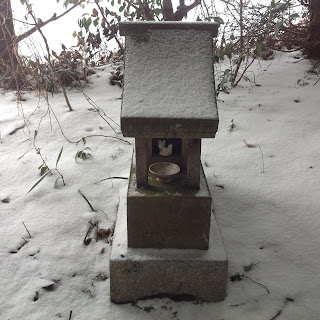
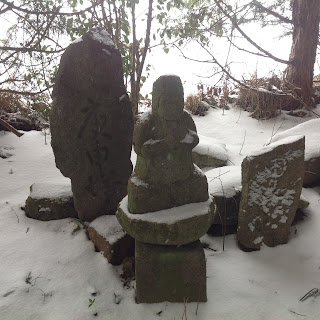
Each morning is made fresh, clean and beautiful with a new coating of snow. It is a subtle softening of the edges of the world, without guile or intent. That gentle accumulation of delicate white crystals on every leaf and frond, branch and stone, machine, mansion or tumble down shed, that blankets them and makes them all equal within its tender embrace. It reminds me that beauty is the natural state of the world, of nature, of this universe in which we are privileged to live and breath and sense the infinite wonder of being.
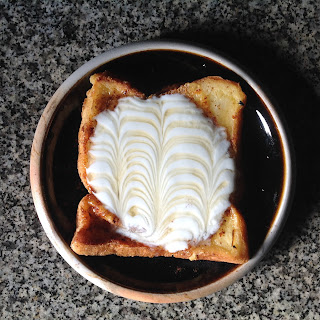
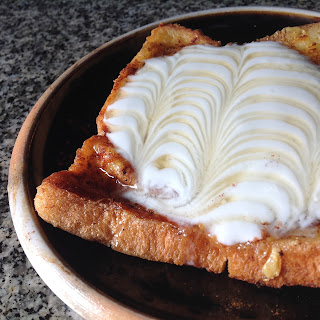
I open the shutters in the predawn glow, then light the wood stove to warm our home. Grinding coffee and setting it to brew on the stove, I give a call out to those who need to leave the dreaming world and get off to school or work. Back in the kitchen I start to prepare Obento and breakfast, and the family start to emerge one by one and begin their own preparations for the day ahead. I break an egg into a bowl, add a hundred milliliters of milk, two spoons of sugar and a dash of vanilla, then whisk it with a fork till it is nice and smooth. Into this I soak two slices of bread, drizzle a little olive oil into a frypan on the stove, and lay the bread gently in the pan to sizzle. As the fragrance of coffee, vanilla and toasting bread fill the room I lay out plates and cutlery on the kitchen table. Each slice of french toast is flipped once so that each side is the golden brown of fox fur, and when they are done I place them on the black surface of the plate, dust them with cinnamon and top them with a spoonful of homemade yoghurt. After trickling lines of honey backwards and forwards across the yoghurt I drag the tip of a knife through the lines to feather the pattern. I pour the coffee, and breakfast is served!
The modern world, human society, can be a complex and difficult place. I don’t think that it needs to be, it’s just that we tend to outsmart ourselves, mistaking luxury and extravagance for happiness, and forget to care and be kind sometimes…so I strive for a simple life, rich in all the unassuming beauty that nature provides, and hope that my work is an expression of that. And every day is a chance to start afresh.
Saturday, 3 July 2021
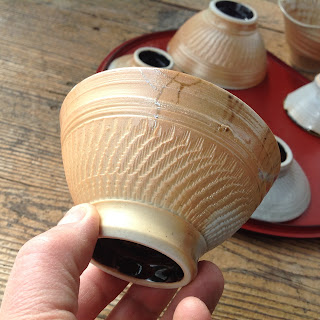
When is a Chawan not a Chawan?
When is a teabowl not a teabowl?

![]() |
| Four Kanji that all say "Wan" and mean bowl, from left: Wooden, Metal, Pottery, Bowl for Tea Ceremony |
Friday, 8 January 2021
Libations
The powdery snow creaks and groans as I shovel a path from the house to the kiln shed in the pale predawn light. I take special care on the stone steps, making sure they are free of snow before I walk on them, as once the snow is compacted it becomes ice, slippery and dangerous, and I will be walking this path many times today. This is the day of my “Hatsugama”, my first firing for the year.
Returning to the house, I get the tray which I have prepared and carry it carefully to the kiln shed. On it are two sake cups from my last firing, a rice bowl with a handful of uncooked rice grains mixed with salt, a bottle of Nihonshu and a box of matches. The sake is a gift from an old friend, his favourite, a “Daiginjo” from Utsunomiya in Tochigi Prefecture, my old stamping ground. I open the bottle and pour sake into one of the cups, a cylindrical guinomi with strong throwing rings, a form based loosely on the shape of bamboo, filling it to the brim. A little of it spills on my hand as I lift the cup and place it on the brick beside the arch at the top of the door and the sweet fragrance of sake fills the kiln shed. The second guinomi is rounder, like an inverted shiitake mushroom, and I take it outside and fill it with freshly fallen snow. I place it carefully beside the first guinomi. Above them, on the metal frame of the kiln, is the “Kagami mochi” new year’s rice cake. I carry the rice bowl outside and sprinkle the mixture of rice and salt to the four compass points for protection and purification, then come inside and do the same in the four corners of the shed.
I pray.
I pray for a safe firing and a safe year.
I pray that the pots will be blessed with the beauty of the flame.
I pray for health, happiness, and peace for all my loved ones and all those who will use the vessels from this firing.
I pray for the wisdom to do what is right and good.
Once satisfied that the wood is burning properly, I go back to the studio to mix a batch of soft fire clay slurry to seal the gaps between the bricks of the door. In a bucket I mix warm water and dry powdered “Dosembo” fire clay in about a 1:4 ratio to make it a thick porridge-like consistency. I stir with my hand so that I can feel it’s texture and make sure it is smooth and free of lumps. Carrying it back to the kiln shed, I start to smear it over the bricks of the kiln door with my right hand but leaving my left hand clean, carefully forcing the clay into and over the gaps to prevent draft from seeping through them between the bricks and sealing the kiln door. Starting from the bottom, I gradually work my way up, systematically and painstakingly. Sealing the door properly means that the only source of oxygen into the kiln is the fire mouth, and the only exit for exhaust fumes is the chimney or the spy holes. It therefore allows a much better control of the draft and atmosphere inside the kiln, either by adjusting the damper or by the amount of fire wood per stoke, the size to which it is split and the timing of each stoke.
As I seal the door with my right hand, I keep a constant eye on the pyrometer to make sure the kiln doesn’t climb too quickly. This firing is starting from frozen, so I want it to climb at about seventy-five degrees celsius per hour, rather than the one hundred degrees an hour which I would fire to in summer. When the wood in the firebox has burned down to embers and the temperature starts to drop below the ideal gradient, I stoke five pieces of wood into each fire mouth with my clean left hand, then continue the sealing of the door with my right. At last the door is sealed, and I take the bucket with the remaining fireclay back the studio so that it doesn’t freeze solid, and wash my hands with soap and water before returning to the kiln.
I am reminded of another firing, ten years past, a day of fire and snow just before the earthquake, when I spoke with my daughter about life and death. About how I believe that a human soul is to the universal soul as a snow flake is to the life giving water which pervades our world. Ephemeral and precious, we are fragments of spirit in the world looking at itself and finding meaning. The libations that I make are symbols of that, acknowledging the “Genius Loci”, the spirit of this place and the generations who have come before us. They symbolise the changing nature of the universe and help me recognise and show gratitude to the greater forces which I borrow in order to practice my craft, to live and breathe, to be. And the understanding that I, too, will one day return to that from which I came, and that this firing, this day, this moment, is a blessing that should be cherished.
And thus the year, the “Hatsugama”, the first firing, begins. Let’s pray that they turn out well, but let us also strive to make each moment, each action, the best that we can. For that is what defines us.
With these thoughts in my head, I stoke the kiln once more, and go back to the house for breakfast.
Friday, 1 January 2021
Fulcrum
Dawn breaks in the south east, beams of light reaching out across the valley, tinting the world in shades of red and gold. Countless flakes of snow falling gently through the air catch the light and send it sparkling across the landscape, as I stand by the warmth of the wood stove, mug of cappuccino in hand, and watch this morning’s overture through our front windows. A deep blanket of snow covers the world, the houses, the trees, the mountains, blurring the edges and sharpening the shadows. The snow shines lustrously in shades of pink and orange, glinting off the facets of innumerable crystals strewn over the garden. There is a quiet stillness in the world, even though it is full of the motion of the falling snowflakes and ever changing radiance of the sun in its inexorable journey across the sky.
Perhaps it is just another sunrise in an endless string of sunrises stretching back to the beginning of the world. A thread that will continue forward until the world ends. But today, I am standing at the fulcrum between the past and the future, in the shelter of my pillar and post, wattle and daub cave, bearing witness to this unique iteration of the cosmic dance. As my portion of the earth’s ever rotating surface slides once again beneath the event horizon between night and day, out of shadow and into light, the bubble of swirling gasses that protects my home from the vacuum of space filters and refracts the sun’s radiance like a kaleidoscope of infinite variation. The whirling eddies of the flaming sea which covers the sun will never again glow exactly as it does right now, the earth will never spin through this self same spot, nor the clouds ever billow the same way.
Maybe it’s simply another fall of featureless white, like any other day in any other winter. Yet the drifts of snow are carved by the capricious wind, an ever changing accumulation of snow flakes beyond number. Flakes which have materialized from thin air up in the clouds, water condensing on motes of dust and freezing into hexagonal crystalline structures, no two the same. Floating on the breeze or driven by the gale, the earth pulls them gradually down where they gently settle upon her face. They gather into thick, deep layers, like precious gems, each one an unrepeatable experiment in possibilities. As I drink my coffee I marvel at the limitless variety of nature’s perfection.
And to some, it’s just another mug, one of many hundreds that I have made over the years. But, if you pay attention, you will find that they are all unique. This mug is this mug. The handle is smooth within the grip of my fingers, rising from the rim and curving smoothly down to rejoin in a spiraling tendril at the base of the cup. Ash which has accumulated on the surface of the clay inside the wood kiln, much as the snow settles on the landscape outside, has melted into a rippling glass which coats the throwing rings and chattering, pooling in the hollows of the texture and running in a rivulet down the side of the mug to hang as a droplet just above the foot. Where the flow of the flame has left the surface untouched by ash, in the leeward side of the handle and the body, the clay has flashed orange and gold like the colours of the sunrise through the clouds. A few stalks of Igusa rush have left delicate strokes of dark ash where they were bound around the pot, like branches in the snow. Every touch of my fingers, every stroke of every tool, every lick of flame, is here in my hands as the coffee warms them through the walls of the mug, its fragrance filtering through the frothed milk and cinnamon sugar, its flavour thrilling my senses as it flows over my tongue.
Nature will always find a form which is in perfect harmony with the complex forces which are at work upon it. And that perfection has nothing to do with sameness or uniformity. There are no two snow flakes, no two leaves upon any tree, no two people throughout all of history, that have ever been the same. From the cosmic to the microcosmic, each and every one is a unique and unrepeatable moment in eternity, wondrous and precious. We humans, nature self aware, bear witness to that wonder, and can become part of the process which gives new form to that wonder. Even if it something as unassuming as a mug of cappuccino on a snowy morning.